

If your skin has started behaving differently in your 40s, drier, more reactive, breaking out, or ageing faster than you'd expect, you're not imagining it. And you're far from alone.
Most women going through perimenopause or menopause notice changes in their skin. The frustrating part is that very few are warned it's coming.
Here's what's actually happening, and what the evidence says about how to respond.
Why Menopause Changes Your Skin
The short answer: oestrogen.
Oestrogen isn't just a reproductive hormone. It plays a central role in maintaining skin structure, hydration, and collagen production throughout your life. When levels fall during perimenopause and menopause, the effects on your skin can be rapid and significant.
Research published in the British Journal of Dermatology found that up to 64% of women attending menopause clinics report skin problems: dryness, itching, dullness, texture changes, and increased sensitivity. These aren't minor cosmetic complaints. They're physiological responses to a hormonal shift.
The Collagen Problem
Collagen is the protein responsible for skin firmness and structure. Oestrogen is one of its key regulators.
When oestrogen drops, collagen production drops with it and fast. Studies published in the journal Maturitas found that women lose approximately 30% of their skin collagen in the first five years after menopause, then about 2% per year thereafter.
This is why so many women describe their skin as having "aged suddenly." In a real biological sense, it has. Fine lines deepen, skin feels thinner, firmness shifts around the jaw and cheeks, and the skin's ability to heal slows down.
The Hydration Problem
Oestrogen also helps regulate how well your skin holds onto moisture, supporting hyaluronic acid production and maintaining the skin barrier, the outer layer that keeps moisture in and irritants out.
When oestrogen falls, that barrier becomes genuinely more compromised. The result is dryness, tightness, rough texture, and sensitivity to products that never caused issues before. If your skin has suddenly turned reactive, this is likely why.
It Can Also Trigger Breakouts
This one catches a lot of women off guard.
As oestrogen declines, androgens (steroid hormones, including testosterone and DHEA, yes male hormones present in everyone) can have a relatively stronger effect on the skin, increasing sebum production and triggering breakouts, often around the chin and jawline.
A 2022 review in the journal Climacteric highlighted the wide-ranging hormonal skin changes, including acne, facial hair changes, and slower wound healing.
Many women are dealing with dryness and breakouts simultaneously. Topical products can help, but if competing hormonal signals are behind it, they'll only go so far, which is worth knowing before you overhaul your entire routine.
What About Perimenopause?
Perimenopause, the transitional phase before periods stop, can begin years before menopause itself. Oestrogen levels during this time are erratic rather than steadily low, which makes skin changes harder to predict and easier to dismiss.
Women in their late 30s and early 40s may notice these shifts long before they'd think to connect them to their hormones. Dr Louise Newson, one of the UK's leading menopause specialists, identifies skin changes as among the most common and underrecognised symptoms of perimenopause.
If something has shifted and you can't explain it, it's worth considering whether hormones are part of the picture.
What Actually Helps
HRT
If falling oestrogen is driving the changes, restoring oestrogen is the most direct intervention. Clinical evidence shows that HRT can increase skin collagen, improve moisture retention, and reduce fine lines, a physiological outcome of restoring hormone levels, not just a cosmetic side effect.
NICE guidelines recommend HRT as a first-line option for managing menopause symptoms. If you haven't had a proper conversation about it with your GP, it's worth asking. The British Menopause Society can help you find a qualified specialist if needed. Or if you are located in Northern Ireland, our sister company Array has just launched our own Menopause and Wellness Clinic in Belfast!
Tretinoin
Tretinoin is a prescription-strength vitamin A derivative and the most evidence-backed topical treatment for skin ageing. It works at a cellular level: stimulating collagen production, accelerating cell turnover, improving texture.
For menopausal skin, it directly addresses collagen loss and surface texture in a way that requires medical guidance to do safely. The early weeks need careful management, but the long-term evidence is robust. A consultation isn't just about the prescription - it's about getting the formulation and introduction right for your skin.
Barrier support
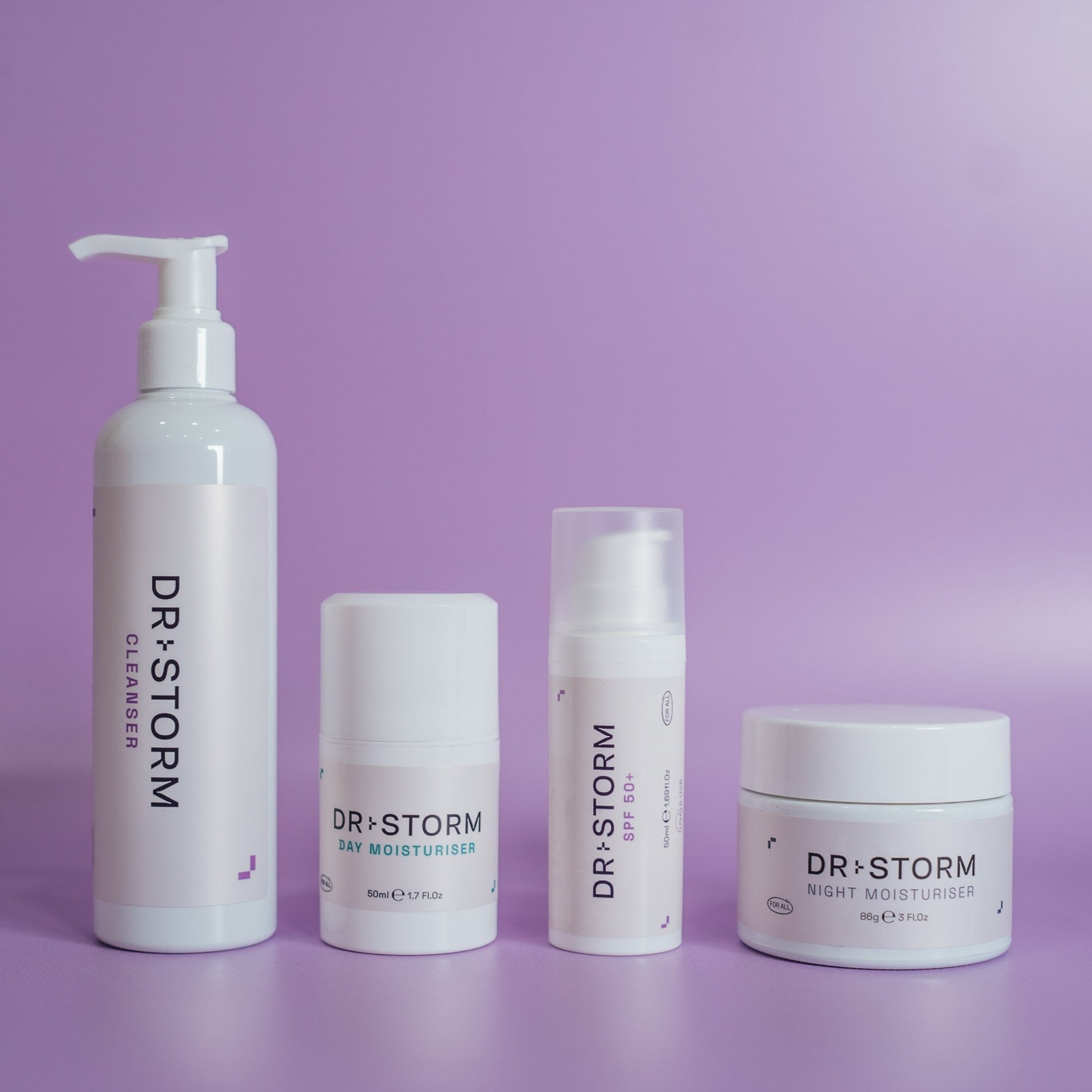
Given how significantly menopause compromises the skin barrier, supporting it topically is foundational. A gentle cleanser, a moisturiser with ceramides or niacinamide, and daily SPF - particularly important as skin thins - all help maintain what the hormonal shift is working against.
Supplements
Collagen supplements are heavily marketed at this demographic. The evidence is more modest than the marketing suggests. Dr Louise Newson notes that addressing the hormonal cause of collagen loss is likely to be more meaningful than supplementation.
The Bigger Picture
Menopause is still significantly under-discussed in healthcare and even more so when it comes to skin. A 2026 global survey by Galderma of over 4,300 women aged 45-60 found that 60% felt less attractive as a result of menopausal skin changes, and most had received no guidance from a healthcare professional about it.
That's a gap worth closing. You deserve more than a shrug and a moisturiser recommendation.
If you are experiencing menopausal symptoms and are concerned about caring for your skin, we are always here to support our customers. Reach out to our team any time at team@drstorm.co.uk
_____________________________________
Sources:
-
British Journal of Dermatology - Menopause, skin and common dermatoses (2023): https://pmc.ncbi.nlm.nih.gov/articles/PMC10092853/
-
Maturitas - Skin collagen loss in postmenopausal women: https://pubmed.ncbi.nlm.nih.gov/3120067/
-
Climacteric - Skin, hair and beyond: the impact of menopause (2022): https://www.tandfonline.com/doi/full/10.1080/13697137.2022.2050206
-
PMC - Managing Menopausal Skin Changes: A Narrative Review: https://pmc.ncbi.nlm.nih.gov/articles/PMC12374573/
-
NICE Menopause Guideline NG23: https://www.nice.org.uk/guidance/ng23
-
Dr Louise Newson - Skin Changes During Perimenopause and Menopause: https://www.drlouisenewson.co.uk/knowledge/skin-changes-during-perimenopause-and-menopause
-
Dr Louise Newson - Can Collagen Help Menopausal Skin: https://www.drlouisenewson.co.uk/knowledge/can-collagen-help-menopausal-skin
-
British Menopause Society: https://thebms.org.uk
- Galderma - Menopause-Related Skin Changes Global Survey (2026): https://www.galderma.com/news/galderma-tackles-menopause-related-skin-changes